Posts Tagged ‘job’


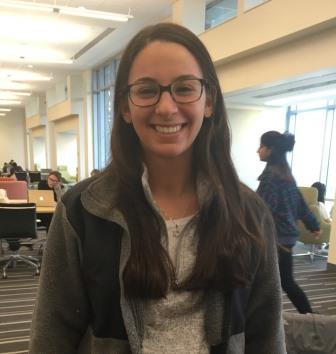
My dad takes care of the FAFSA for financial aid. He takes out the Parent-Plus Loan, as well. So, it’s all just basically financial aid and loans. My dad lost his job when I was in high school and he was still paying off my older sister’s undergrad. And I have a twin, so they’re paying college tuition for three people at this point.
When he lost his job, it (the expenses) fell onto my mom. It was hard to figure out where I wanted to go because I couldn’t afford to go to a private school. Now my dad’s a real estate agent and my mom still has her job. If it wasn’t for loans, I wouldn’t be able to go to college. My car was bought with a loan, too. My car was paid for through a loan that my mom is still working off. My car was $20,000 and I was wondering, “Mom, why did you let me buy this?” But, she’s already paid off half of it. I love my mom, she works so hard. I pay for my own gas and I have a job. My rent and bills are paid through the loans because you can put off-campus housing on it. I can’t afford luxury items, though. Like, I need a new laptop, but I can’t buy one. I’ve had to be smart and budget.

I’ve paid for college by working and getting loans because I don’t get any assistance from the government. I take 17 credits and work almost 40 hours per week at a bar. A lot of the times, I work double shifts. This has affected my schooling a lot. I’ve missed school because I was so tired. It has been just depressing, generally.
I’ve never bought textbooks for school, either, and this is my senior year. I would ask my parents to help me out with food costs or bills if I could, but most of the time I’ve covered those expenses by working. All the remaining money is used to cover what my loans don’t cover for tuition.
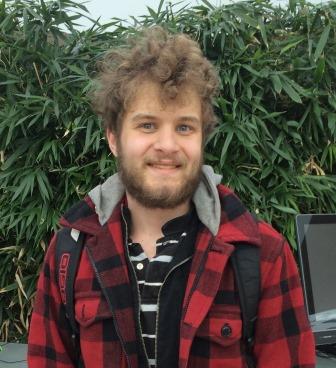
I’m taking out student loans, and working. My parents covered the first couple of years. This semester, I didn’t buy all of my assigned books for class. It seemed like a good way to save money.
Because I work about 20 hours per week while taking 16 credit semesters, I don’t have a lot of time to do anything but work.

I’ve paid for college through a combination of loans, both public and private, tuition assistance, and money out of pocket. The first three years of school I really struggled. I’d been living on my own since I was 17, and had little to no help with bills and regular living expenses. Starting college made everything 100 times harder. My father has substance abuse problems and been in and out of rehab for the past ten years so although he makes money on paper, my family doesn’t see any of it. Because of this, I couldn’t qualify for TAP. I work part time throughout the year and full time over the summers, and I put every penny towards paying for off campus housing.
I paid for tuition, books, transportation, and food with loans that I took out. In the past, I’ve even had to take out private loans, because financial aid alone didn’t cover my needs. In the last year however, my mother was finally able to claim me on her taxes, so I got the tuition assistance that I really needed all along. Even though my aid doesn’t cover everything, it is such a big help to not to pay for everything out of pocket and through loans. I can finally focus on my coursework and extracurricular activities. I could only imagine how different college would have been for me if I had had this assistance throughout.

Coming from a family of six children, my parents, unsurprisingly, can’t afford to pay much for my college education. Each summer I work over eighty hours a week to make enough money to pay my university bills and cover the cost of living. I have worked in restaurant kitchens, ice cream stores, and outdoors as a canvasser. Of course the demanding hours and high energy these jobs require leaves little time for summer leisure– but one of the biggest challenges it presents is an inability to apply for internships, many of which are unpaid. Being unable to gain work experience in my area of study creates a whole new path of challenges by itself. Jobs today require more experience than many educated people like myself have the time for. I worry that I will be unable to find a lucrative job after graduation, or that people who have had the resources to take unpaid internships will be favored for their experiences.

I am a resident of Brooklyn, NY and go to the Pratt Institute of Art and Design. My family is unable to afford higher education by itself. Pratt has one of the highest college tuition rates and although it is a private school its students do get help from special programs such as the Higher Education Opportunity Program (HEOP). Without this program, it would be impossible for me and for many other people to afford higher education. Currently I have two part time jobs, which interfere with my schooling.
I am also worried about my future financially when I get out of college. It is hard to focus on schoolwork when finances are an issue, and it is especially hard knowing your parents back home are struggling to secure a future for their child. Funding for education is funding for the future, and I don’t think any person should have to struggle and worry about their future. I do not want others to worry and struggle like my family does. If New York does not fund higher education, they are endangering the future for everyone. Education should be given to anyone who has the desire to learn, regardless of their ability to pay. Please, set an example for the rest of the country and the world by funding higher education.

I’m currently a senior attending Queens College full-time. I’m currently working toward my second degree on the pre-law track. My first degree was from Hofstra University in Biology. I work and study very hard to maintain my good grades and recently it’s becoming more and more difficult.
Because I don’t receive any financial aid, I have to work to pay my tuition out of pocket. I work 60+ hours every week as a medical technician to be able to pay my tuition and purchase necessary textbooks for classes that cost anywhere from $500-$1,000. If the state removes the tuition freeze and encourages CUNY to increase tuition to cover costs, instead of providing adequate state funding, it will only make it more difficult for me to pay for my education. I do not want another tuition hike, and am looking forward to the day when CUNY is once again affordable.

I come from a middle class background in a family of 9 so I never expected to get any financial assistance from my parents. I also never expected to receive financial aid from the government because of my father’s income. I knew college would mean debt and I’ve accepted that. However, I don’t think it’s something that I should have had to accept or that future generations should accept. I work two part time jobs along with an 18-credit schedule and an internship. I am also a part of a resident planning committee for my dorms.
I don’t regret all the hard work I do because I know it’s making me a better person every day. But, I do not like that on top of all that I do, I still have to worry about finding several thousands of dollars in order to continue making contributions to my college and the surrounding community. I have wanted to attend college since I was a little kid, in my mind it represented the first step towards achieving the American dream. However as time went on and I woke up to the reality of America’s true nature, I have come to terms with the fact that I’m going to have to work as hard as I physically and mentally can just to achieve stability. My legislators owe it not only me but to the honor of their office to make sure the financial burden of college becomes a thing of the past.

College is costly to me. I pay through loans and out of my pocket. The cost makes it definitely hard to enjoy college since I need the help of loans to pay for it. I work about 15 hours a week throughout the school year in an attempt to lower the cost of college. I’m the first from my family to get a degree. I am from a Caribbean island, and there, it’s a big deal to get a degree. I’m studying nutrition and exercise sciences at the moment but not sure what’s in store after college. I try not to think about the stress that paying for college and maintaining my grades puts on me. If I do, it makes me very sad and even frustrated with the way the system works here in America. Financial aid has been a huge help, even though it never covers everything (academic, housing, books, meals).

I mainly pay for college through loans and I have a grant through the Educational Opportunity Program (EOP). I’ll eventually be struggling to pay back my loans in the future. I always avoid buying textbooks.
I’ve also worked part-time on campus and those jobs haven’t interfered with my studies. I’ve been able to do my homework at those jobs. I wouldn’t be able to go to college without EOP. EOP grants don’t just help you out with money. They help you with actually getting into college, too. It has its own orientation, pretty much. So, they’re the ones that have accepted me, not necessarily the school.
