
In the beginning of August, me and my mom started talking about the fall semester of college and how to pay for it. We looked at the cost and my mom was worried because it was over $8,000. I told her that the Tuition Assistance Program (TAP) would cover the costs associated with college, but not everything.
Then we drove to the college and we spoke with one of the representatives at the financial aid office. She told us “The financial aid would not cover everything”. My mom then asked “How am I supposed to pay it” and the lady said “I don’t know.” When I got home that day, my mom and I had a talk about what to do and we decided to take out loans. The problem about that is I won’t be able to work on my career because I have to find a job ASAP and work for who knows how long to pay off the loans. My career will be on hold for weeks, months, or even years.



I use financial aid to pay my tuition in college. I qualify for the Tuition Assistance Program (TAP). However, the TAP award is too low. It should be more. I have to buy books, food, and pay for transportation costs and housing.
This semester, my textbooks cost almost $300 and my metrocard costs $120 per month. Because I am a full-time student in college, it is not possible to work. I hope I am going to graduate on time so that I do not run out of TAP money.

As an Environmental Studies major, I’m happy to have the experience of pursuing my passion and learning about what I love. Paying for college is my biggest hassle. My parents “make too much” for me to be able to get financial aid so I’ve been forced to take out private and unsubsidized loans to pay my tuition. Because of the ridiculous interest rates of the private loans, I watch my balance increase every month. With each increase, I wonder how I will be able to pay these loans off and how long it will take me. As someone who wants to pursue a graduate degree, I also wonder if my current debt will affect my ability to do so and how I will pay for it. I had to take a semester off 2 years ago because of a hold on my account due to unpaid fees that I was not able to resolve in time.
Like many other students, I’ve had to get a job on campus to earn money to pay for tuition, textbooks, a monthly metrocard, buy food, and pay bills. Despite what FAFSA has determined about my family’s financial standing, depending on them to provide me with money for all these expenses is not possible, especially considering the fact that I’m one of two children currently in college. While I feel that learning to manage time is an important skill to have in college, I don’t believe that struggling to stay financially afloat is a struggle that college students should have to face. I hope to see a change in what is considered low-income and a greater and more comprehensive approach to helping students pay for education as it should be a right and not a privilege.

I am currently relying on my parents’ income to support me, but to be honest, a lower-middle class family supporting two children in college is hard. So I am forced to work in order to pay for school.
My schedule is so tight because I must work until 12 or 1 AM for a restaurant and still take a full-time course load to qualify for the Tuition Assistance Program (TAP). I am also paying for my own textbooks. As a student who majoring in biology, textbooks are a major burden on my wallet. I am also paying for my own transportation.

I’m a student at Queensborough Community College. I work in a pet store as a full time employee. It’s hard for me to maintain my job and study, but I believe hard work will gift me a brighter future. I get a little help from the Tuition Assistance Program (TAP) and some monetary help from my mom. My mom said that she will soon stop helping me because she wants me to be self-sufficient. She does not make that much money and is also raising my half sister on her own.
I will be in a horrible situation if the tuition increases or if I get less financial aid. I wish to see an America that treats all of her children equally regardless of social status or economic level.
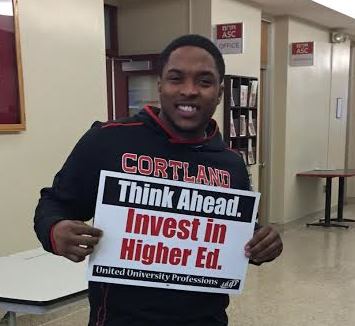
I was born and raised in New York City where I have seen violence firsthand as a teen, and soon figured out that higher education was my ticket to success. During my senior year in high school, my mother was laid-off from her job and my hopes for affording a college degree became a bit dimmer. I chose to attend Tompkins County Community College because of its affordability, and then transferred to SUNY Cortland. The financial aid package I receive for SUNY Cortland covers a majority of tuition. However the additional costs force me to work two jobs, one at a local grocery store and the other as a tour guide on-campus. The additional costs such as transportation, housing and food would have to be satisfied by my long working days, and two separate student loans. I accept little financial help from my parents to lessen the burden on their shoulders.
I am a psychology major and will be a first-generation graduate in my family. My post-graduation goal is to start a non-profit organization in New York City dedicated to adolescent outreach and empowerment. I believe that if you’re lucky enough to be in college, you should never take it for granted and make use of the opportunity. I am from a troubled area and would like to incite a college culture within youth from my community, and enlighten them to the opportunities that set me on a path to success.
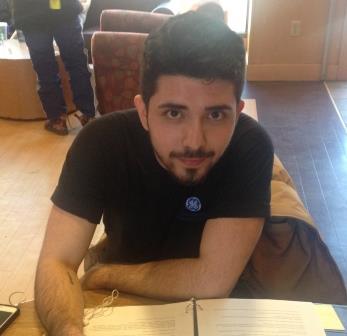
I pay for school personally. I actually get short term loans to try to help my credit. So there’s interest, which is currently at 11%, that I’m paying through VISA, and this is at a monthly rate. I take out over $5000 a year, and I pay that off monthly.
I work anywhere from 32-42 hours a week. I drive back and forth and my money is going to gas. I’m paying for textbooks on top of paying for loans. I also pay rent, and my cellphone bill. In order for me to have a car, because we just can’t afford cars like that, I had to take out another loan and buy a car, a used car and I pay that off monthly too. Everything just kind of adds up to a point where I’m literally just working check to check at this point.
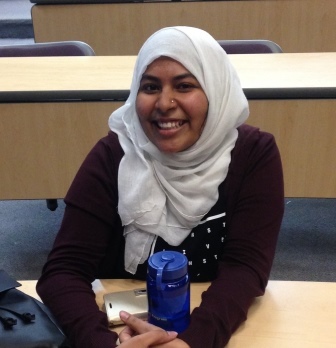
Luckily, I do not have any student loans as of now but, it does seem like something I might need in the future. One reason I am actually in college I would say is because the Educational Opportunity Program (EOP) exists and the support they provide. Right now, I’m not taking any loans, but I am struggling. I am a commuter so I have to actually spend two-three hours sometimes commuting depending on when I miss a train or something.
Either I spend more time, or I spend more money. So, if you’re not in economic debt, then you are in mental debt. I am totally, I don’t function half of the time. I’m so tired when I come to class, I’m just trying to stay awake. If I didn’t have to commute and if I could live on campus and get up and go to my classes it would be awesome. I’m pretty sure my grade would not suffer as much as they do right now. It’s hard to balance that time.
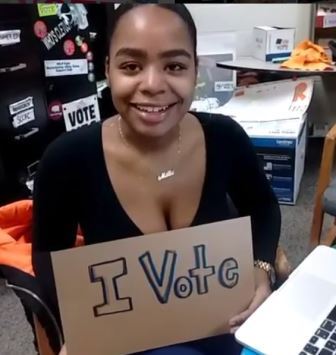
As a senior in high school, I did not think college would ever be in my grasp. Most of my family did not go to college so I thought I would not either. I was unsure how I would pay for my higher education. Thankfully, my high school had a terrific career program that provided the necessary tools to make my college dreams a possibility. I applied to SUNY Cortland through their Educational Opportunity Program (EOP) and was admitted. I am grateful to have come across this program. They helped me prepare for college socially and economically, as well as help me prepare in terms of academics. I receive financial aid in order to help pay for school, however a majority of the additional costs are placed on my shoulders. Aside for paying for tuition, I front the cost of other expenses such as food, social activities, toiletries, textbooks and other school supplies. The list can go on forever, As an off-campus resident, I must also pay rent. I am taking eighteen credits and also working two jobs to help me with the cost of living.
I am studying sociology and professional writing and planning on attending graduate school. I am an aspiring counselor and believe that the investment for a postgraduate degree will increase my chances of employment, and ultimately allow me to pay off loans more efficiently.
My dad takes care of the FAFSA for financial aid. He takes out the Parent-Plus Loan, as well. So, it’s all just basically financial aid and loans. My dad lost his job when I was in high school and he was still paying off my older sister’s undergrad. And I have a twin, so they’re paying college tuition for three people at this point.
When he lost his job, it (the expenses) fell onto my mom. It was hard to figure out where I wanted to go because I couldn’t afford to go to a private school. Now my dad’s a real estate agent and my mom still has her job. If it wasn’t for loans, I wouldn’t be able to go to college. My car was bought with a loan, too. My car was paid for through a loan that my mom is still working off. My car was $20,000 and I was wondering, “Mom, why did you let me buy this?” But, she’s already paid off half of it. I love my mom, she works so hard. I pay for my own gas and I have a job. My rent and bills are paid through the loans because you can put off-campus housing on it. I can’t afford luxury items, though. Like, I need a new laptop, but I can’t buy one. I’ve had to be smart and budget.
