Posts Tagged ‘textbooks’

I use financial aid to pay my tuition in college. I qualify for the Tuition Assistance Program (TAP). However, the TAP award is too low. It should be more. I have to buy books, food, and pay for transportation costs and housing.
This semester, my textbooks cost almost $300 and my metrocard costs $120 per month. Because I am a full-time student in college, it is not possible to work. I hope I am going to graduate on time so that I do not run out of TAP money.



As an Environmental Studies major, I’m happy to have the experience of pursuing my passion and learning about what I love. Paying for college is my biggest hassle. My parents “make too much” for me to be able to get financial aid so I’ve been forced to take out private and unsubsidized loans to pay my tuition. Because of the ridiculous interest rates of the private loans, I watch my balance increase every month. With each increase, I wonder how I will be able to pay these loans off and how long it will take me. As someone who wants to pursue a graduate degree, I also wonder if my current debt will affect my ability to do so and how I will pay for it. I had to take a semester off 2 years ago because of a hold on my account due to unpaid fees that I was not able to resolve in time.
Like many other students, I’ve had to get a job on campus to earn money to pay for tuition, textbooks, a monthly metrocard, buy food, and pay bills. Despite what FAFSA has determined about my family’s financial standing, depending on them to provide me with money for all these expenses is not possible, especially considering the fact that I’m one of two children currently in college. While I feel that learning to manage time is an important skill to have in college, I don’t believe that struggling to stay financially afloat is a struggle that college students should have to face. I hope to see a change in what is considered low-income and a greater and more comprehensive approach to helping students pay for education as it should be a right and not a privilege.

I am currently relying on my parents’ income to support me, but to be honest, a lower-middle class family supporting two children in college is hard. So I am forced to work in order to pay for school.
My schedule is so tight because I must work until 12 or 1 AM for a restaurant and still take a full-time course load to qualify for the Tuition Assistance Program (TAP). I am also paying for my own textbooks. As a student who majoring in biology, textbooks are a major burden on my wallet. I am also paying for my own transportation.
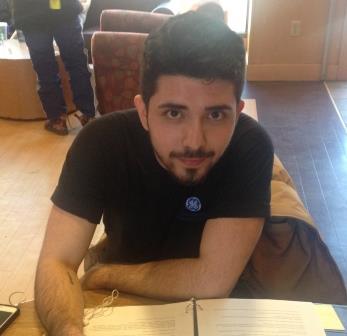
I pay for school personally. I actually get short term loans to try to help my credit. So there’s interest, which is currently at 11%, that I’m paying through VISA, and this is at a monthly rate. I take out over $5000 a year, and I pay that off monthly.
I work anywhere from 32-42 hours a week. I drive back and forth and my money is going to gas. I’m paying for textbooks on top of paying for loans. I also pay rent, and my cellphone bill. In order for me to have a car, because we just can’t afford cars like that, I had to take out another loan and buy a car, a used car and I pay that off monthly too. Everything just kind of adds up to a point where I’m literally just working check to check at this point.
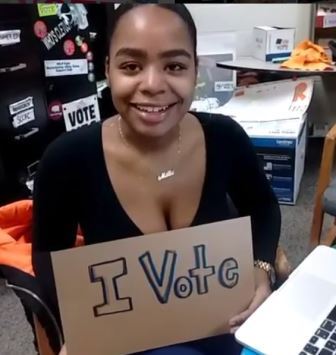
As a senior in high school, I did not think college would ever be in my grasp. Most of my family did not go to college so I thought I would not either. I was unsure how I would pay for my higher education. Thankfully, my high school had a terrific career program that provided the necessary tools to make my college dreams a possibility. I applied to SUNY Cortland through their Educational Opportunity Program (EOP) and was admitted. I am grateful to have come across this program. They helped me prepare for college socially and economically, as well as help me prepare in terms of academics. I receive financial aid in order to help pay for school, however a majority of the additional costs are placed on my shoulders. Aside for paying for tuition, I front the cost of other expenses such as food, social activities, toiletries, textbooks and other school supplies. The list can go on forever, As an off-campus resident, I must also pay rent. I am taking eighteen credits and also working two jobs to help me with the cost of living.
I am studying sociology and professional writing and planning on attending graduate school. I am an aspiring counselor and believe that the investment for a postgraduate degree will increase my chances of employment, and ultimately allow me to pay off loans more efficiently.

I’ve paid for college by working and getting loans because I don’t get any assistance from the government. I take 17 credits and work almost 40 hours per week at a bar. A lot of the times, I work double shifts. This has affected my schooling a lot. I’ve missed school because I was so tired. It has been just depressing, generally.
I’ve never bought textbooks for school, either, and this is my senior year. I would ask my parents to help me out with food costs or bills if I could, but most of the time I’ve covered those expenses by working. All the remaining money is used to cover what my loans don’t cover for tuition.
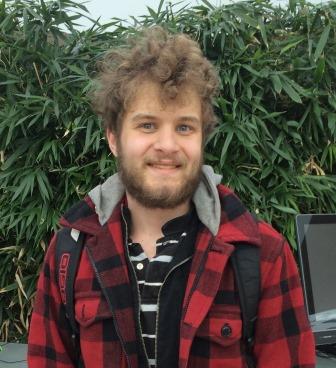
I’m taking out student loans, and working. My parents covered the first couple of years. This semester, I didn’t buy all of my assigned books for class. It seemed like a good way to save money.
Because I work about 20 hours per week while taking 16 credit semesters, I don’t have a lot of time to do anything but work.

I have private loans and some scholarships that I receive. Mainly, I’ve struggled with keeping up with my bills. The only real struggle right now is my car insurance. It goes up as I get older, as a man. My scholarships cover textbook costs, although sometimes I have to spend extra to get online software. So, I have to pay out of pocket for that — usually like $40.
When I was in community college, my car broke down on my way to school and I had to pay $6,000 out of pocket to get my transmission fixed. It kind of broke me. It just stressed me out all the time because I had to work so hard to afford that while going to school.

I am a veteran who served in the United States Air Force for 4 years active duty and 1 year Air National Guard for New Jersey. With the completion of my contract, I received funding for education through the 9/11 GI Bill. This bill pays for 48 months of school, including tuition and part of my cost of living. I pay for my monthly metrocard, New Jersey transit monthly pass, textbooks, food and rent out of pocket.
Because my textbooks are all at least $200 each, I’ve chosen not to buy any of them this semester. I just go to library. If I want to do any reading or studying I have to go to the library and can’t take the book home. As for the rest of these costs, if they were covered I could use the money I make toward investing in my future career instead of just getting by month to month. I’ve started a record label but I can’t invest in it the way that I want. This is stalling my career aspirations. I really want this microphone that Michael Jackson used in all of his records and that one of my favorite rappers, Logic, is using. But it’s $400 — which is the price of my metrocard and NJ transit monthly tickets combined. I’m also trying to buy a house, which would be expedited if I didn’t have all of these costs.

My name is Carola and I’m a foreign student studying at Pratt from Australia. Being thousands of kilometers away means that I have to sustain myself here. College affordability for me means having enough money to be flexible and make the most of my experience living in New York. Most importantly this means being able to deal with unexpected expenses such as losing an important item, getting sick or taking a cab home when it does not feel safe to catch the public transport. With the cost of art supplies, textbooks and the basic cost of living so high it can feel like you have very little flexibility and even the smaller expenses can easily lead to a lot of anxiety about being able to make ends meet.
