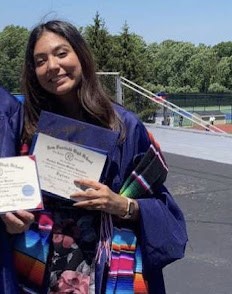
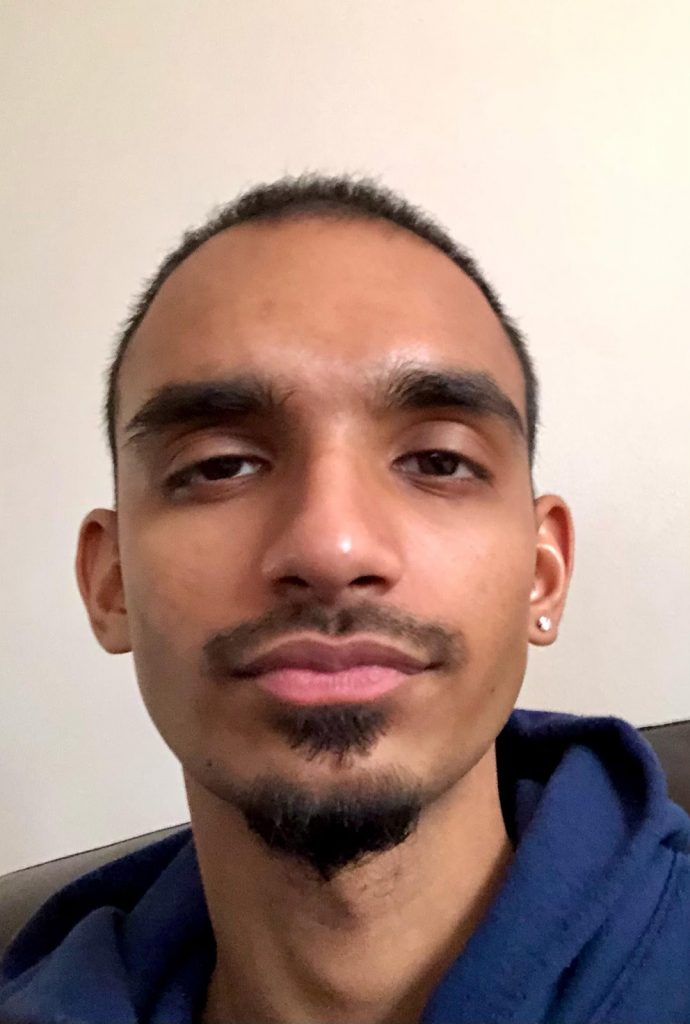
Daniela is a freshman at the City College of New York pursuing a degree in Psychology. She hopes to become a psychiatrist after she graduates so she can address the taboos of mental health in her culture and help vulnerable people. Although Daniela is working hard to get her degree, limited financial aid and lack of communications with financial aid advisors is making it hard for her to stay focused. She receives TAP but it is not enough to cover all her expenses, leaving her to pay most of her tuition out of pocket. Daniela’s mother helps her pay her tuition but that is becoming hard since she has 2 younger siblings she also needs to provide for. Daniela also has to dorm on campus since her parents live far from CCNY, and that increases the cost of going to college significantly. To make matters worse, financial aid advisors don’t always answer Daniela’s questions about FAFSA or financial aid packets, making it harder to plan how she will pay her tuition. She has recently applied for loans and is looking to work to pay for her college education.
I attend The Borough of Manhattan Community College. I was paying for college through financial aid and the college discovery program. I wasn’t one of the smartest or focused students, so it has been challenging due to the fact that I was required to keep up a certain GPA in order to keep my financial aid. I started my years at BMCC as an Early Childhood Education major, but I was in the process of changing my major to go into social work. Yes, I have loans, I’m a little worried. I have been in BMCC for some time now and I fear that my financial aid will be finished before I complete my four years. And then even more after that. Financial aid has been very helpful with paying for my classes, but towards the end of every semester, it was hard to buy food because I was in the school for mostly the whole day and also having to pay for my train and bus rides to and from class every single day was hard
In the beginning of my 2019 semester, I got a job and it was helping me a little bit, but for me to get a decent paycheck, I would have to work long hours which distracted me from being able to focus on my school work which has further delayed my education. I do not personally pay for rent, but my mother does, and I felt bad that she had to do it all on her own, so I was trying tirelessly for about 2 years to look for a job to help support her a little bit on top of paying for food and transportation.
Getting a degree for me would mean everything. Everyday I have people asking me, “are you in school”, “when are you finishing school,” etc. I’m just tired of delaying the process. It would also mean a lot to my mom. I would be the first one in my family to go and to complete college. I want to give not just my mom a better life, but myself as well and it would give me a chance to make a difference in the world.
I currently attend The Borough of Manhattan Community College and I’m a Science major. I got in on an excelsior scholarship and with limited financial aid. So, I had transferred to BMCC in my freshman year in the Spring semester and was put into a remedial math course after I had taken it at my other school before BMCC and I passed it as well. It took me some time to get it dealt with but I was able to speak to a deputy teacher in the department who said that she’d try me out of it but that it was past the deadline to drop classes, but I managed through that pitfall.
Right now, the only thing that’s really holding me back is the pandemic. I have also been battling some health issues, nothing connected to Covid-19, but still enough to keep me out of class for a while. I would love to be given a break by the school board because some classes have gotten more difficult due to the professor being hard to work with and the pandemic throwing everything off. I had no loans and when I had a job I was working roughly 20 plus hours a week, since I worked when I had a day off of school or had a class finish early. I normally worked on night shifts, I was also a full time student during this time.
For some reason financial aid only paid for half of my tuition, I had no idea why, but the pandemic kinda saved me because financial aid was not paying everything. I did have to pay for what they didn’t cover, I paid out of pocket when I had a job but this semester it’s lower since I’m at home. I currently live with my parents and they predominantly pay the bills, but I do pay the gas and light bills, and sometimes other bills. I thankfully paid the max on our gas and it saved us during the pandemic.
Personally, any degree in this day and age is for me, an opportunity to not be held back by society. It’s the place that I got the most opportunity, with great teachers who have seen so much in me, since in high school and in junior high I had to compete so hard against others. So, getting this degree is a really important opportunity. I hope that I’ll be able to graduate on time because of this pandemic.
I attended The Borough of Manhattan Community College and for me it was not that difficult but it was challenging.I was not eligible for financial aid because my parents were both working, so I was not at all given any rewards from them. It was because my parents had worked for thirty plus years, which caused me to not be eligible for financial aid so we had to pay out of pocket for my school. Around that time my family had moved into a private home. It was then after that that every year would be a little harder, we had to do some renovations, so the majority of the money that my parents made had to go into fixing the house. It took me about 4 years to finish at BMCC because I had to be a part-time student and get a job because I did not want to overwhelm myself with school and so that my parents didn’t have to spend so much money on me and books and also the house. It would have been too much.
By the end of my last 2 years I started to work as an Usher at the school, so I was able to pay for classes for myself and help around the house whenever I needed. Since I’m living with my parents, they didn’t charge me for rent but if they needed money for the basics like food or any other essentials, they’d ask me or my brother. I worked about thirty hours a week. Yeah, it got a little stressful in the end, but it wasn’t as bad compared to other students who had to take out loans, I thankfully had no loans to pay back.
At BMCC I was studying Small Business Entrepreneurship. I would like to own a photography company and as an art major it’s more for the experience and the networking, so studying or getting a degree means getting the experience that not everyone would get by doing it on your own. Going to college helps you get your foot out the door, but you have to push yourself to make the next step.
My name is Kiara David and I grew up in the Bronx. I currently attend SUNY Cortland with a major in Communications, minor in Women Gender Studies, and a concentration in Public Relations . I decided to come to SUNY Cortland because it was the only University to accept me through EOP. My plans in the future are to hopefully work in the public relations department of some type of business. To pay for school I used a mix of loans and grants. Many of my loans covered books and where I lived off campus.
I currently work as a student director in the Corey Union information desk for about 20 hours a week. I usually work to help pay for groceries and personal expenses . During the pandemic I would describe my college experience as a rollercoaster. I am a hands-on learner, so learning virtually has made it difficult for me . This pandemic overall has made it hard to receive income because a lot of jobs are closing down and I rely on work to help myself survive. Getting a college degree to me means uniqueness, in other words,I am one of the fortunate people to make it out of college. I am extremely worried about paying back loans after I graduate because finding a job six months after you graduate is not certain. Luckily my financial aid awards have covered most of my higher education costs but , I am only blessed to say this because of the EOP program I am in. Overall I feel as though SUNY & CUNY schools should fully be funded because I feel as though it shouldn’t be by luck that you have the opportunity to better yourself and be able to seek an education.
Currently, I am in my last semester at Queensborough Community College where I am working on an Associate Degree in Criminal Justice. After I graduate from QCC my plan is to move on to a 4 year degree at John Jay. I am also a full-time student so I have to take 13-14 credits each semester. I am an ASAP student, which pays for a multitude of expenses like my Metro card, Textbooks, and part of my tuition. The rest of tuition gets covered by FAFSA and TAP. I don’t work and I wanted to when I applied for federal work study but I was denied because I already “met” financial needs. I pay for my food out of pocket or I would take food from home.
If I didn’t receive financial aid I probably wouldn’t have the chance to gain a place in the professional workforce or acquire new skills needed for my personal and professional development. I am very concerned about graduating on time because that is my time that I am dedicating to earning this degree and I want it to be maximized and put to good use with no impediments.
It still amazes me that CUNY used to be a free institution but now we have to pay for our future and our success. We have to constantly be worried about certain programs being cut like ASAP or SEEK. I come from a single parent household where my mother has to hold down two jobs just to support my family. Education has been a big staple in my household as well because not a lot of people get to go to college or take advantage of the opportunities given. This is why we need a fully funded CUNY because students like me. It would be very beneficial to raise efforts in doubling the Pell grants because that would allow for more students of color like myself to be able to enroll in college and diversify admissions as well as the workforce. We wouldn’t be discouraged to take a stand.
I am the second person in my family to be attending college in America, in New-York as well. I had the opportunity a year after my high school graduation to get admitted into The Borough of Manhattan Community College to study Business Management. It was a new world for me, I took my two very first semesters at the end of 2014 Fall semester, and into the start of 2015 Fall semester. I had to failed 5 out of 8 classes horribly. My advisor, or what I could call my advisor at the time had poorly given me class that were much more difficult to manage as a freshmen and also told me to take five of those hard courses to improve my chance of graduating on time. I did, but I did not do well at all, and as a student who did not easily give in and accept failure, it was hard to see those failing grades, I had to take those classes over and I was no longer a fan of getting advised for my class. I learned from another student how to access my Degreeworks that shows us our course requirements and I figured out what I could handle and what I couldn’t, but I had to take a year off of school immediately after my second semester, because it had turned out that my financial aid had only paid for half of my tuition because of a missing New-York resident document that I had not been notified that I needed and I had a debt of two thousand plus dollars to pay off. For the next year I took my time to pay it off as I got a job that helped me out, at the time the pay was 7.50 an hour, and every second week of a month that paycheck went to the debt collectors who had called me every two weeks a month religiously for a whole year. He was quite nice, but it was a sad time for me as I could not continue my education.
I finally managed to return to school for the fall of 2016 and passed every class with flying colors, during the worst black Friday ever. I hadn’t taken advice on time or early after my first horrible experience with them, I had waited until the day before school each semester up until 2018 when my professors from my own degree could finally advise me. It went over much better and I took a light workload of three to two classes since I kept working and could not commit to being full time anymore, the price of living was defeating me and I was quite the hard worker so I juggled work and school while finally having the burden of paying for school off my back as I then received full Financial aid. I was thankful that I never took out a loan towards college, but it was tempting.
For me, this degree means that I was strong enough, determined enough and driven enough to push myself no matter the hardships and costly charges and rapid worry that swam through me on a daily basis and finally made it to the finish line. I want to show that I wouldn’t give up, that this degree for me will be an achievement that I worked my hardest for and would help me get somewhere better even though I’m not yet certain as to where yet. My struggles have definitely put off my graduation three years longer than it had to, and the pandemic coming into the picture also pushed it back another semester, but I truly do intent to fight until I can hold my degree in my hand. I would not disappoint my family or myself, I worked too hard for this.
My name is Shaneya and I’m from the Bronx. I am currently a Senior triple majoring in Criminology, Political Science & Africana Studies. In my free time I love to do things like dance, read and listen to music. When I decided to go to SUNY Cortland, I honestly wanted to go because they had my majors and I liked the campus and the tuition was somewhat in the price range. My plans for after college would be to go to grad school for criminal justice and after go to a PhD program.
I’ve paid for school through a mixture of student loans and scholarships and out of pocket money. Rent was paid by refund checks and food is paid with food stamps and cabs for transportation. It was hard before I got scholarships; I had to pay thousands of dollars out of pocket. I currently have a work study with the professional studies building on campus as a clerk, but am only offered 10 hours a week. As the Pandemic hit, it was especially hard because work slowed down a lot of ways to make an income.
I am a sophomore at Queensborough Community College majoring in sociology. I am graduating after the summer semester 2021 and have applied to Hunter College – Silberman School of Social Work. I want to be a LCSW (Licensed Clinical Social Worker). I am 31 years old, and I was not able to go to College after graduating high school in 2007. I was one of the many students who was undocumented and was not able to afford going to college. I was not able to get any aid to pursue an education after High school, and it was also very difficult because I had to also work to support my family. I was the eldest of 3 and came to The United States when I was 9.
In 2012 when President Obama passed the Dreamer’s Act. I filed for D.A.C.A and a year later in 2013 I was able to work in the country legally and support my family with a decent paying job. Even after receiving D.A.C.A I was not able to go to school. Because D.A.C.A does not aid students with any financial support. I just had to keep working to support my family because even though I received D.A.C.A my parents did not. So, the responsibility lied heavily on me.
I met my husband in 2013 and we dated for 5 years, before getting married in 2018. He is an American citizen, and I got my Green Card a year after we got married. I applied to Queensborough Community College on my 30-birthday rewarding myself with progressing my education, trying to achieve my goals. I thought it would be easier now paying for school and I would qualify for getting financial aid but that was definitely not the case. I applied for FAFSA and was denied because now together my husband and I made over the threshold amount to receive financial aid. At this time, I was still working trying to support my family.
Soon after in 2020 the pandemic hit, I lost my job. My husband and I had some savings which are getting used to pay for school and textbooks. FAFSA still will not approve me for any aid, since they use taxes from years prior to see if you qualify. I have made numerous attempts to apply to the Excelsior Scholarship, TAP and PELL for assistance but got denied yet again. My husband works, and I go to school. It has been really tough, but we make it work. We do not have any children; I am an excellent student and have been on the dean’s list since I started college. I was not even aware of being on the Dean’s list, till I saw my transcript. I then proceeded to ask my advisor if that shows for anything, and his answer was “Unfortunately, that doesn’t do much but congratulations”. Fortunately, I am not below the poverty line but living in New York and paying high prices for everything means paying for college has not gotten any easier. It has been a really long journey for me to achieve my goals. We need a fully funded CUNY because there are students like me who are still stuck in limbo. First, I was undocumented I couldn’t afford tuition because of no tuition assistance and I had to take care of my family, then I was approved for D.A.C.A still couldn’t afford school because D.A.C.A does not make you eligible for any financial assistance, it just makes you legal so you can pay taxes and continue to work. When I received my green card, I was still left out with any financial support because the combined income was over the threshold.
There are millions of me out there, who would like to pursue their dreams but are not able to because of finances. Having a fully funded CUNY would help New Yorkers like me, finish school, get a decent job so we are not stuck in limbo when it comes to our future. I am fortunate enough that I have a partner who supports me and my dreams. But most do not, and a Fully funded CUNY would really help those who have struggled and are struggling to get a higher education to pursue their goals and dreams.
Leslie Spinosa is a first-year student at Pratt Institute. Although apprehensive about the remote learning option offered to her after committing to Pratt, Leslie felt somewhat obligated to accept the offer in fear of losing her presidential merit scholarship or loans in the future. Leslie was accepted into Pratt in Spring of 2020, right before COVID-19 had kicked into high gear. Given her family’s financial security at the time, she felt confident in committing to the institute with reliance on her presidential merit scholarship, student loans, and federal work study allotment. However, that security was compromised in the wake of COVID-19, as her father was out of work as a car dealer for months. Mr. Spinosa applied for a pell grant to provide his family some relief, however it never followed through. Now, he is back at his job, however business is slow and school has become harder to pay for as a result. Leslie has taken on a job of her own to help out, however, with the especially chaotic schedule of online school, she has not been able to take on enough work hours to generate a significant income. Not being able to work on campus to acquire her federal work study money has been a major loss. Additionally, Leslie’s family income was higher at the time of applying for the FAFSA, resulting in a lower grant which, in light of her current financial situation, has left her to rely heavily on loans. Further, Leslie has dealt with her fair share of basic struggles with the new remote learning system. She often finds it difficult to count on consistent communication with her professors, and has had a particularly hard time getting her questions answered by her financial aid advisor, leaving her in the dark about where she stands with the school. Despite all of this, Leslie has worked exceptionally hard to make it through the semester thus far, and will continue to push forward through these trying circumstances. Leslie sees the great value and necessity in acquiring her college degree, and hopes Pratt will provide her with the technical skills and connections to launch her post-graduate career.