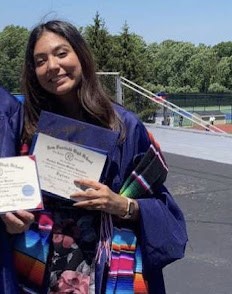
I am a senior attending Hunter College. Thankfully, I was eligible for FAFSA and TAP which paid for my college tuition as well as provided me with money for transportation and book fees. However, not everyone is lucky enough to get their tuition paid for. I remember hearing the sad news about people around me not being able to go to their dream college or college at all due to the expensive and constantly rising tuition that could not be easily paid. Not everyone had parents who saved up money for their children’s tuition or had extra money to pay for college. To some students and families, it was already hard to pay rent, phone bills, Wi-Fi bills, or buy food to feed their families. Some of these students could not do loans to create more debt which will burden them more or were not eligible for tuition assistance. I find it so sad that there are people out there that had to give up their dreams, passions, and education due to the cost of tuition. People should not be expected to pay to learn and if they were to pay, it should not cost this much. It is unbelievable that one of the highest debts in America is from student loans.
Although I am grateful to get tuition assistance, I worry that one mistake will take away my financial aid such as not doing well in school, failing a class, or in this case, an error made by the system. I remember being a freshman in college and not knowing how college and financial aid worked. I had filled out FAFSA and TAP but I did not receive my financial aid until the end of the semester. After repeatedly going to the Financial aid and Bursar offices at my school, I found out that due to a mistake made by the system, I could not receive my financial aid. They had never informed me of this issue and it was not until I fixed it that I received financial aid. Due to my tuition being paid late that semester, I had to pay a few hundred dollars out of my own pocket to pay for late fees, textbooks, transportation costs, and etc. I wish there were more things being done to help students feel at ease when receiving financial aid. I think of the many students out there that must have gone through the same problem as me.
Like many of the students, I also help pay for phone bills, water bills, Wi-Fi bills, and etc. Tuition, textbook fees, and transportation are not the only things being paid for with the help of financial aid. To make it worse, transportation fees cost a lot and with things being a one tap system, I cannot save money on transportation fees. I worry that the MTA will increase the price again one day which will become very troubling to me. I want to continue studying psychology so I can one day use my knowledge to help people out. To do so, I will be staying in college for a few more semesters to study. I worry about the cost of tuition as financial aid will not cover me the whole time. I am looking for jobs and have been applying to scholarships to help with my tuition. Therefore, I wish the people in charge of higher education realize that many students out there are worrying about paying for their tuition on top of working hard to study. I hope that they can work more on the funding and make it more accessible to other people who wish to have the opportunity to go to college.
Daniela is a freshman at the City College of New York pursuing a degree in Psychology. She hopes to become a psychiatrist after she graduates so she can address the taboos of mental health in her culture and help vulnerable people. Although Daniela is working hard to get her degree, limited financial aid and lack of communications with financial aid advisors is making it hard for her to stay focused. She receives TAP but it is not enough to cover all her expenses, leaving her to pay most of her tuition out of pocket. Daniela’s mother helps her pay her tuition but that is becoming hard since she has 2 younger siblings she also needs to provide for. Daniela also has to dorm on campus since her parents live far from CCNY, and that increases the cost of going to college significantly. To make matters worse, financial aid advisors don’t always answer Daniela’s questions about FAFSA or financial aid packets, making it harder to plan how she will pay her tuition. She has recently applied for loans and is looking to work to pay for her college education.
I attend The Borough of Manhattan Community College. I was paying for college through financial aid and the college discovery program. I wasn’t one of the smartest or focused students, so it has been challenging due to the fact that I was required to keep up a certain GPA in order to keep my financial aid. I started my years at BMCC as an Early Childhood Education major, but I was in the process of changing my major to go into social work. Yes, I have loans, I’m a little worried. I have been in BMCC for some time now and I fear that my financial aid will be finished before I complete my four years. And then even more after that. Financial aid has been very helpful with paying for my classes, but towards the end of every semester, it was hard to buy food because I was in the school for mostly the whole day and also having to pay for my train and bus rides to and from class every single day was hard
In the beginning of my 2019 semester, I got a job and it was helping me a little bit, but for me to get a decent paycheck, I would have to work long hours which distracted me from being able to focus on my school work which has further delayed my education. I do not personally pay for rent, but my mother does, and I felt bad that she had to do it all on her own, so I was trying tirelessly for about 2 years to look for a job to help support her a little bit on top of paying for food and transportation.
Getting a degree for me would mean everything. Everyday I have people asking me, “are you in school”, “when are you finishing school,” etc. I’m just tired of delaying the process. It would also mean a lot to my mom. I would be the first one in my family to go and to complete college. I want to give not just my mom a better life, but myself as well and it would give me a chance to make a difference in the world.
I currently attend The Borough of Manhattan Community College and I’m a Science major. I got in on an excelsior scholarship and with limited financial aid. So, I had transferred to BMCC in my freshman year in the Spring semester and was put into a remedial math course after I had taken it at my other school before BMCC and I passed it as well. It took me some time to get it dealt with but I was able to speak to a deputy teacher in the department who said that she’d try me out of it but that it was past the deadline to drop classes, but I managed through that pitfall.
Right now, the only thing that’s really holding me back is the pandemic. I have also been battling some health issues, nothing connected to Covid-19, but still enough to keep me out of class for a while. I would love to be given a break by the school board because some classes have gotten more difficult due to the professor being hard to work with and the pandemic throwing everything off. I had no loans and when I had a job I was working roughly 20 plus hours a week, since I worked when I had a day off of school or had a class finish early. I normally worked on night shifts, I was also a full time student during this time.
For some reason financial aid only paid for half of my tuition, I had no idea why, but the pandemic kinda saved me because financial aid was not paying everything. I did have to pay for what they didn’t cover, I paid out of pocket when I had a job but this semester it’s lower since I’m at home. I currently live with my parents and they predominantly pay the bills, but I do pay the gas and light bills, and sometimes other bills. I thankfully paid the max on our gas and it saved us during the pandemic.
Personally, any degree in this day and age is for me, an opportunity to not be held back by society. It’s the place that I got the most opportunity, with great teachers who have seen so much in me, since in high school and in junior high I had to compete so hard against others. So, getting this degree is a really important opportunity. I hope that I’ll be able to graduate on time because of this pandemic.
I attended The Borough of Manhattan Community College and for me it was not that difficult but it was challenging.I was not eligible for financial aid because my parents were both working, so I was not at all given any rewards from them. It was because my parents had worked for thirty plus years, which caused me to not be eligible for financial aid so we had to pay out of pocket for my school. Around that time my family had moved into a private home. It was then after that that every year would be a little harder, we had to do some renovations, so the majority of the money that my parents made had to go into fixing the house. It took me about 4 years to finish at BMCC because I had to be a part-time student and get a job because I did not want to overwhelm myself with school and so that my parents didn’t have to spend so much money on me and books and also the house. It would have been too much.
By the end of my last 2 years I started to work as an Usher at the school, so I was able to pay for classes for myself and help around the house whenever I needed. Since I’m living with my parents, they didn’t charge me for rent but if they needed money for the basics like food or any other essentials, they’d ask me or my brother. I worked about thirty hours a week. Yeah, it got a little stressful in the end, but it wasn’t as bad compared to other students who had to take out loans, I thankfully had no loans to pay back.
At BMCC I was studying Small Business Entrepreneurship. I would like to own a photography company and as an art major it’s more for the experience and the networking, so studying or getting a degree means getting the experience that not everyone would get by doing it on your own. Going to college helps you get your foot out the door, but you have to push yourself to make the next step.
My name is Kiara David and I grew up in the Bronx. I currently attend SUNY Cortland with a major in Communications, minor in Women Gender Studies, and a concentration in Public Relations . I decided to come to SUNY Cortland because it was the only University to accept me through EOP. My plans in the future are to hopefully work in the public relations department of some type of business. To pay for school I used a mix of loans and grants. Many of my loans covered books and where I lived off campus.
I currently work as a student director in the Corey Union information desk for about 20 hours a week. I usually work to help pay for groceries and personal expenses . During the pandemic I would describe my college experience as a rollercoaster. I am a hands-on learner, so learning virtually has made it difficult for me . This pandemic overall has made it hard to receive income because a lot of jobs are closing down and I rely on work to help myself survive. Getting a college degree to me means uniqueness, in other words,I am one of the fortunate people to make it out of college. I am extremely worried about paying back loans after I graduate because finding a job six months after you graduate is not certain. Luckily my financial aid awards have covered most of my higher education costs but , I am only blessed to say this because of the EOP program I am in. Overall I feel as though SUNY & CUNY schools should fully be funded because I feel as though it shouldn’t be by luck that you have the opportunity to better yourself and be able to seek an education.
Leslie Spinosa is a first-year student at Pratt Institute. Although apprehensive about the remote learning option offered to her after committing to Pratt, Leslie felt somewhat obligated to accept the offer in fear of losing her presidential merit scholarship or loans in the future. Leslie was accepted into Pratt in Spring of 2020, right before COVID-19 had kicked into high gear. Given her family’s financial security at the time, she felt confident in committing to the institute with reliance on her presidential merit scholarship, student loans, and federal work study allotment. However, that security was compromised in the wake of COVID-19, as her father was out of work as a car dealer for months. Mr. Spinosa applied for a pell grant to provide his family some relief, however it never followed through. Now, he is back at his job, however business is slow and school has become harder to pay for as a result. Leslie has taken on a job of her own to help out, however, with the especially chaotic schedule of online school, she has not been able to take on enough work hours to generate a significant income. Not being able to work on campus to acquire her federal work study money has been a major loss. Additionally, Leslie’s family income was higher at the time of applying for the FAFSA, resulting in a lower grant which, in light of her current financial situation, has left her to rely heavily on loans. Further, Leslie has dealt with her fair share of basic struggles with the new remote learning system. She often finds it difficult to count on consistent communication with her professors, and has had a particularly hard time getting her questions answered by her financial aid advisor, leaving her in the dark about where she stands with the school. Despite all of this, Leslie has worked exceptionally hard to make it through the semester thus far, and will continue to push forward through these trying circumstances. Leslie sees the great value and necessity in acquiring her college degree, and hopes Pratt will provide her with the technical skills and connections to launch her post-graduate career.
A lot of people fail to consider how financial aid needs to cover more than just tuition. The living expenses associated with getting a college education quickly add up and end up costing students thousands of dollars on necessities — mandatory expenses that not everyone can afford. Even though I was lucky enough to get financial assistance to afford my tuition, like many other students, I’m left responsible for hundreds of dollars in books and transportation each semester as well as thousands of dollars for housing.
I lived on campus at City College when COVID-19 hit; we were told we would receive partial refunds for leaving our leases early but we only received this money six months later. Additionally, many students had already signed lease agreements for the Fall 2020 semester, and the only financial solution for them was to pay $1000 to terminate that lease or be held responsible for the full $12-18 thousand dollars. Most students pay for dorming with their finances and the refunds could have had a significant impact on students who lost income due to the pandemic. In a twisted way, COVID-19 has made college more affordable for me by reducing the cost of transportation to campus and allowing me to live with my parents instead of paying for housing. It’s time politicians in Albany acknowledge the external costs of higher education.
I attend The Borough of Manhattan Community College. I was paying for college through financial aid and the College Discovery program. I wasn’t one of the smartest or most focused students, so it has been challenging because I was required to keep up a certain GPA to keep my financial aid.
I started my years at BMCC as an Early Childhood Education major, but I was in the process of changing my major to go into social work. I have loans, I’m a little worried. I have been in BMCC for some time now and I fear that my financial aid will be finished before I complete my courses. And then even more after that. Financial aid has been very helpful with paying for my classes, but towards the end of every semester, it was hard to buy food because I was in the school for the whole day and also having to pay for my train and bus rides to and from class every single day was hard
At the beginning of my 2019 semester, I got a job and it was helping me a little bit, but for me to get a decent paycheck, I would have to work long hours which distracted me from being able to focus on my school work which has further delayed my education. I do not personally pay for rent, my mother does, and I felt bad that she had to do it all on her own, so I was trying tirelessly for about 2 years to look for a job to help support her a little bit on top of paying for food and transportation.
Getting a degree for me would mean everything. Every day I have people asking me, “Are you in school?”, “When are you finishing school?” etc. I’m just tired of delaying the process. It would also mean a lot to my mom. I would be the first one in my family to go and to complete college. I want to give my mom a better life and myself as well and it would give me a chance to make a difference in the world.
I am studying Business Administration at Queensborough Community College, and I want to pursue accounting in the future. This is my second year, and I am graduating in Fall 2020. I’m currently in ASAP and they help cover some expenses and books, but I don’t receive any financial aid and pay out of pocket for tuition during the summer or winter sessions. Because of COVID-19 I haven’t been able to work for a month, but I still have to pay off my bills and help support my family.
I am an immigrant. The only way I can pay for this college is by working and working too much. I have to deal with my travel expenses, meals, and then my tuition or textbook expenses. I work three jobs to get myself going and also help my family financially too as we are here to make our future. A fully funded CUNY would take a big load of stress off of me and my family, and would especially help immigrant families who are trying to save as much as they can to have a secure and better future.
Being QCC’s Student Government President I think if people didn’t have to worry about paying for college, they could have more time to study or get involved with campus life and opportunities, rather than running to work right after class.