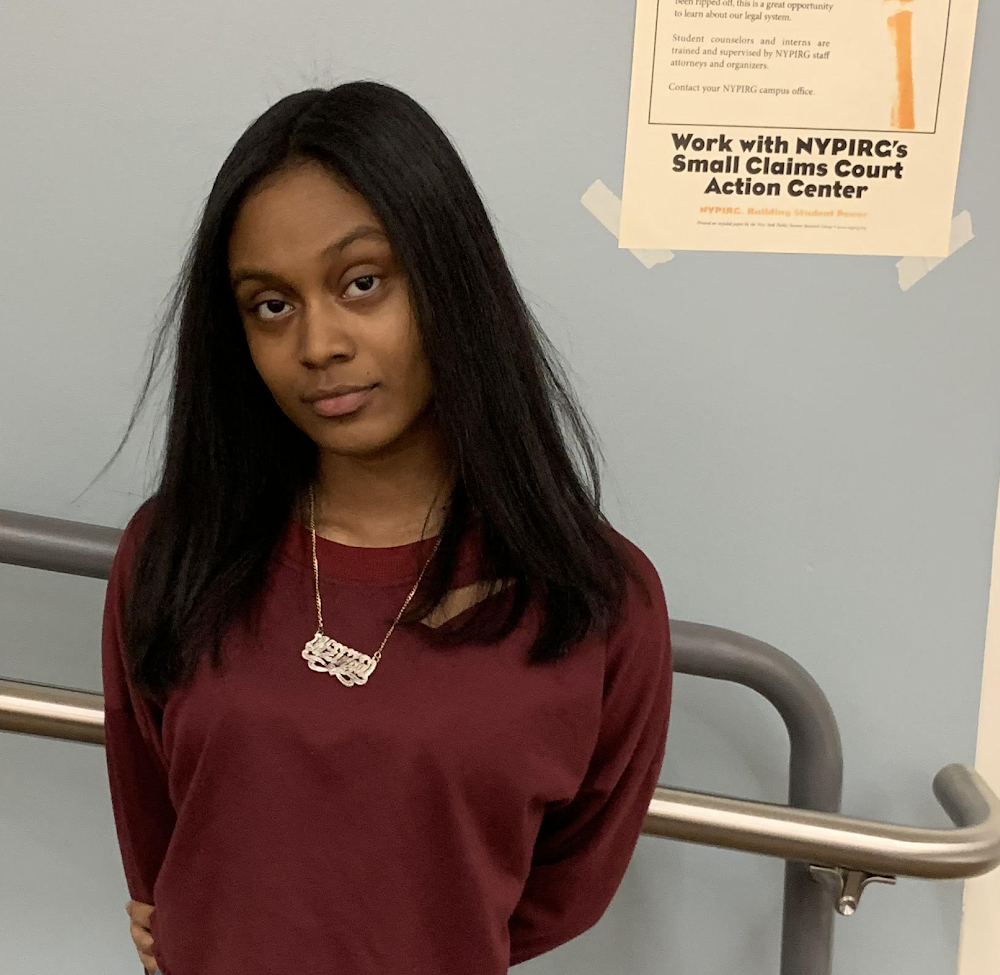
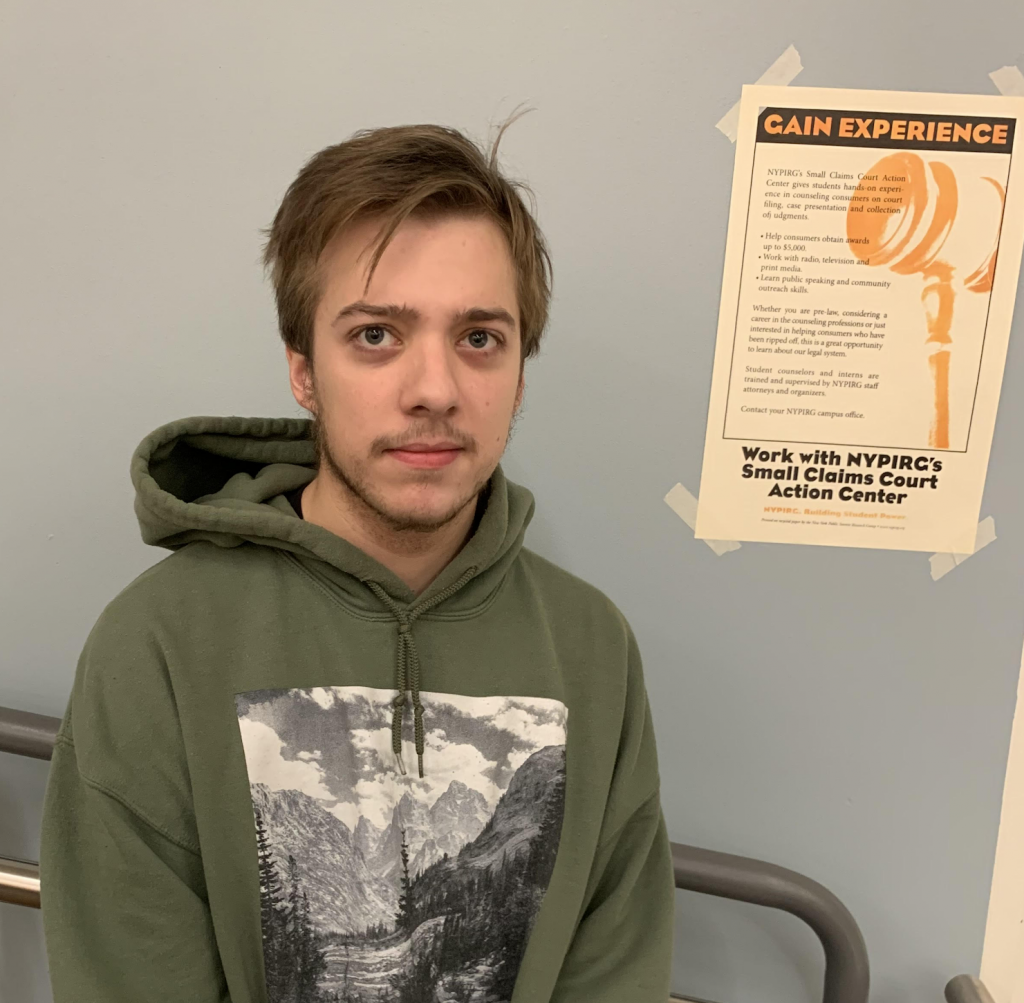
I’m a sophomore at Buffalo State. I’m coming to Buffalo from the Bronx, where I also went to high school. I’m a psychology major, and when it comes to my career goals, I go back and forth between wanting to get into clinical psychology or having my own business around health care.
One of the reasons I chose to come to Buffalo State is that it is one of the less expensive SUNY schools, but even with that, I wouldn’t call it affordable. One of the biggest costs, which changes a lot depending on the semester, is textbooks. I actually didn’t take a math class in the past knowing that I was going to have to spend a hundred plus dollars on a single textbook. This semester, though, I didn’t spend anything on textbooks because one of my teachers has an online textbook, but last semester I spent a little over $300 for textbooks.
I also don’t get a lot in financial aid, so I find myself constantly having to take out loans. I’ve looked into sponsorship and other programs to apply for to pay for school, and I currently do get one grant, but it’s not that much money.
I wish there was an easier way to find out what I can apply for as far as financial aid goes. I’ve been to the financial aid office maybe four times throughout my two years here—so every semester—really just to try to understand my bill and to understand what resources there are to be able to pay it.
I have an advisor, but I wish there were more options, and it was more convenient for students to schedule meetings because a lot of the time your advisor is not available. Even if the resource is technically there, if you can’t access it when you need it, I think it needs to be changed.
I grew up mostly in upstate New York. I went to Lyons High School in Lyons, NY, which is a really small school; my graduating class was about 60 people. My career goal is to become a software developer or programmer—something along those lines—and I am taking computer science classes here at Buffalo State.
I transferred to Buffalo State from Finger Lakes Community College, which was a two-year school, and Buffalo State was one of the less expensive options for four-year colleges.
Last semester was my first semester here in Buffalo. Because my family is recognized as being in need, I get financial aid of like all stripes. I get Pell Grants and would have gotten Perkins if they hadn’t done away with that. I get TAP and Excelsior. Despite all of that—which sounds like a lot, but it’s not—there’s still money that I have to pay out-of-pocket even though my family really can’t afford it.
At Finger Lakes there were three professors that got together and wrote their own book, and that helped with textbook costs there. This semester, most of my textbooks, like three of them were under $20, but one of them was $150. It was one for my information systems class, and there was another I had that was like $90, and it was just to access an online version.
If I could just focus full-time on schoolwork I would do that, but I need money to pay for textbooks and living expenses beyond what’s covered by financial aid, so I am looking for a job.
I’m double majoring in anthropology and Political Science. After graduating, I plan on getting a master’s in International Relations and hopefully working for a nonprofit organization.
I receive the Pell Grant, but it doesn’t cover my full tuition so I have to work and pay the rest out of pocket. I also pay for books, transportation, and food. Working while being a full-time student is stressful because it’s hard to balance school and work.
My biggest challenge as a CUNY student has been getting to class on time because living in New Jersey and commuting to New York is really hard. I would appreciate work-study and have made an appeal on my application but haven’t heard back.
I would appreciate a child care center on campus because I know a lot of students who have children and have nowhere to leave them while they’re in school.
CUNY should be free and fully funded because a lot of students struggle financially, and education should be a right for everyone to access. It shouldn’t be limited by your financial situations.
I’m a senior and after college, I would like to pursue a master’s in International Relations. Currently, I’m getting my tuition paid in full which is something that I’m very grateful for because, if I didn’t receive aid, I wouldn’t be in school. I simply don’t have the financial capacity to pay for tuition. I’m not part of any opportunity programs, and I work to pay for textbooks, food, and transportation.
I would appreciate a child care center on campus because it would really help the students that work and have families to take care of while also attending school.
I think a fully funded CUNY is necessary because, like me, there are thousands of students that need help to complete their degrees, especially financially. A lot of students don’t have the means to pay for classes, and making college free would be really helpful to them.
My biggest challenge as a CUNY student has been balancing work, family, and school. I really would appreciate a fully funded CUNY for students like me and future generations!
My tuition is covered by financial aid, and my parents help me pay for books, food, and transportation. I don’t currently have a job because it has been really difficult to find one that works with my schedule as a full-time student. My biggest challenge as a CUNY student is feeling left out and feeling like there isn’t really a space to feel welcome; as a freshman in a really big college, I was not provided with any real direction.
I would appreciate a child care center on campus because older students might have family on their own, and they might not be able to afford a babysitter or a nanny. Having to dedicate time to your studies becomes a challenge when you have to multi-task in order to take care of a child that needs attention 24/7 while maintaining good grades and working to provide for yourself and the child.
If I didn’t receive financial aid, I probably wouldn’t be in college because it would simply be too expensive for me. Years ago college was free, it’s not anymore, and I don’t understand why we should have to pay to get an education. I also think that at least general education classes should be free because they are only required for the college and don’t pertain to my major. I’m concerned about graduating on time because a lot of the advisors on campus aren’t helpful. Whenever I go to them, it seems like they don’t work with my schedule in helping me graduate on time.
CUNY should be made free for everyone because a lot of low-income students attend, and many might not be able to afford it. If having a degree helps someone get out of a bad financial situation, everyone should have that chance!
I’m a freshman at CCNY. I receive financial aid and pay for books, transportation, and food with my earning from work. I don’t receive work-study and am not part of any opportunity programs. If I didn’t receive any financial aid, I would probably have to take out loans and ask for my parents’ support, but that would be an additional burden on them since they have to have other financial responsibilities.
I would certainly appreciate a child care center on campus because a lot of CCNY students really need it. We need a fully funded CUNY because not all students have access to money. Many of them are struggling. I’m lucky to have parents that would support me if I couldn’t work, but many students don’t have that kind of support. Having to work full time at a job puts a lot of stress on a student and often interrupts their ability to study and maintain their grades. Being in school on its own is very stressful and adding a job to that becomes very draining and can lead to mental health issues.
My biggest challenge as a CUNY student is transportation because the only bus that I’m able to take to get to campus is not reliable, and it interferes with my attendance in class.
I’m a junior majoring in international studies, and I’m minoring in English and Economics. After graduation, I would love to work with a nonprofit organization and hopefully one day I will be able to work with the UN!
I
receive TAP and the Pell grant. I’m part of SEEK, which has helped me
tremendously because they have provided me with a very helpful advisor,
financial help, and an amazing environment for me to be in. I use the money
that I get as a refund after my tuition to pay transportation, food, and books.
I’m currently looking for a part-time job and an internship with a nonprofit organization, but because of my busy schedule at school, it’s very difficult. I’ve also applied for federal work-study, but because financial aid covers my tuition, my application isn’t a priority.
I would
appreciate a child care center on campus because I have many classmates that
bring their children into the classes, and although they don’t often disrupt
the class, they are a distraction to their moms because they have to pay
attention to the children instead of paying attention to the class.
Time management has been my biggest challenge at a CUNY student. I’m very concerned about graduating on time because I have changed majors. It has become very stressful because I am taking six classes next semester. If I didn’t receive financial aid, my parents would have to take out loans to help pay for tuition which would be really hard because I would have to work in order to support myself as well.
We need a fully funded CUNY because many plan on pursuing a master’s or a doctorate degree after college, and if students no longer had to worry about paying for their bachelor’s degree, they could save for furthering their educations. Also, it becomes very hard for a student to maintain a high GPA if they have to work to pay for their tuition, books, and food.
I’m now getting my master’s degree in environmental biotechnology. I get a little help from the government back in Europe, but it isn’t much so my parents have to cover my tuition and housing. The savings that I had from back home covers transportation and books.
Personally, I don’t need a child care service, but I think that it would be a good idea to have one on campus for the students that really need it. My biggest challenge as an exchange student has been adapting to the new environment because everything is new to me, and it takes time to get used to everything. I think that NYPIRG is doing an amazing job and should absolutely continue doing everything they do!
I’m majoring in political science and minoring in journalism. After college, I plan to keep on working with grassroots political organizations with which my beliefs align morally and politically and work with communities who are disfranchised to help them find the resources to live comfortably in this society.
I don’t
receive any financial aid, so my parents and I are covering my tuition, book
costs, and transportation. I personally don’t need the child care center but
would appreciate it for other students. I know of a load of students that are
also parents. A center would take off the financial load of child care.
My
biggest challenge as a CUNY student has been taking classes that I need to
graduate on time and finding vegan options. I’m concerned with graduating on
time because advisors are very inconsistent, and I’ve taken classes that I
don’t need.
I think that we need a fully funded CUNY because there’s a clear disparity in a lot of job fields, and we need a fully funded CUNY to diversify institutions that control what happens to real working-class people. Low-income students of color don’t have the means to complete a bachelor’s degree because of food insecurity, financial insecurity, and other challenges. If they were able to go to school and get a degree while not having to worry about money, these students could change the world! They would have more of a say over their lives and the lives of people who identify with them. I think that that would be a better pathway to an equal society, which is very essential in today’s political climate. If we care about equality and diversity, CUNY needs to be fully funded!
I’m majoring in political science and minoring in journalism. I’m part of the 1% of students that receive the Excelsior scholarship, so I have to complete 30 credits per year, which makes college more stressful by increasing my workload. I also have to stay in New York four years after my graduation, so I plan to attend graduate school. I also am a recipient of the Pell Grant and the TAP award.
I work on the weekends and have to pay for food, transportation, and books myself because I don’t receive SNAP, and I am not part of any opportunity programs. If I didn’t receive any financial aid, I would probably be in debt. I think that CUNY should be fully funded to help to support the growing student body that overwhelms public colleges because most people find it nearly impossible to attend private colleges.
More aspects of CUNY, such as maintenance of the elevators of CCNY, should also be funded. I would also appreciate a child care center on campus to provide support for students that are also parents.